Meet Liv
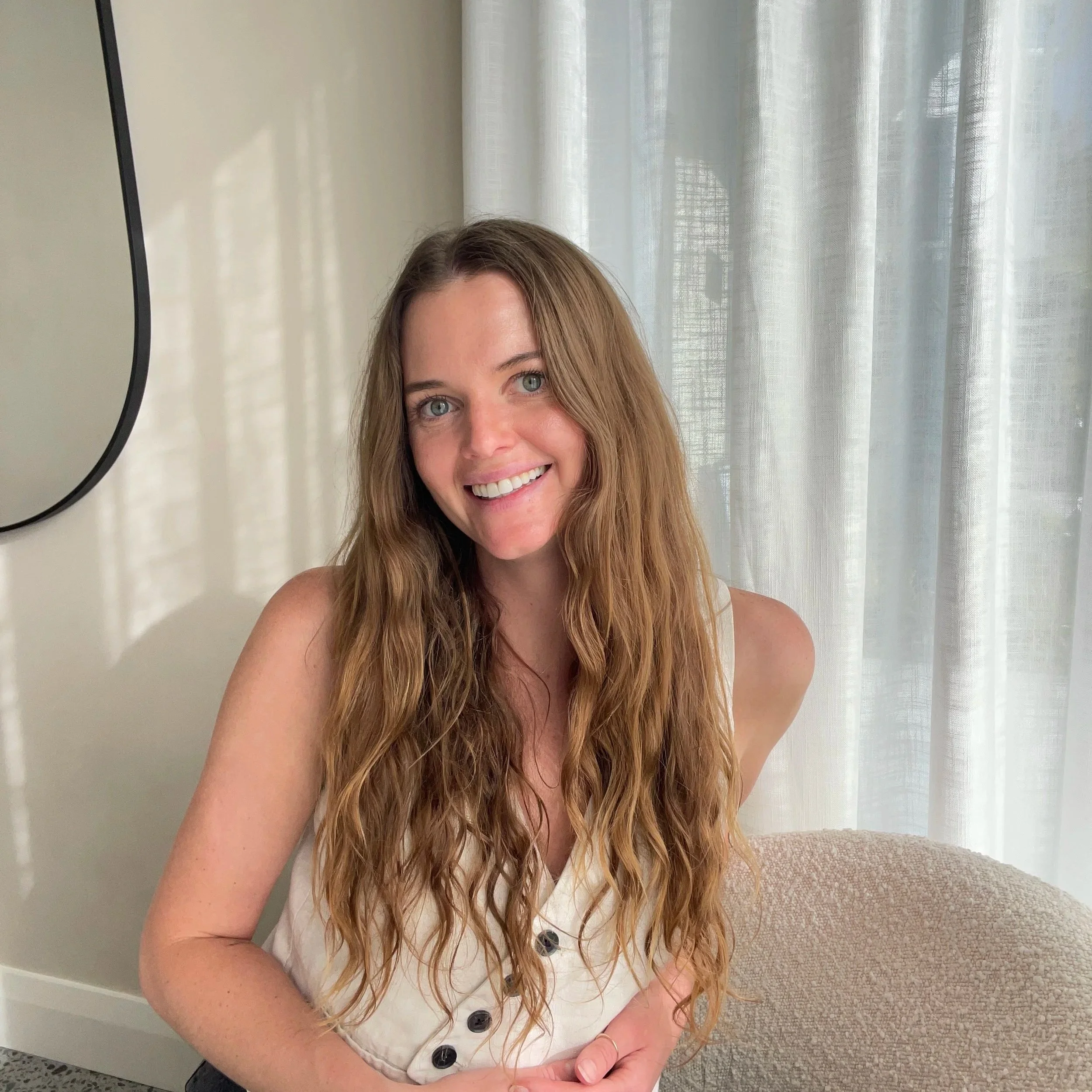
I'm Liv. I was a teacher before I became a spinal flow practitioner. I went to uni straight out of school because that's what you did, and I was good at it, but I never quite loved it. It took me a while to work out why: I'd always been an educator, I'd just spent years on the wrong subject.
This is the subject I was built for. The body, the nervous system, how people move through their lives — and helping them find their way back from stress.
I love the simple things — my family and friends, a good sunset, the ocean, an evening stroll. I spent a few years overseas chasing winter and snowboarding as much as I could, and I've swapped that for learning to surf. I like how I feel and who I am when I'm living this way.
I haven't always been this steady, though. For a long time I was foggy and far away from myself, and very, very good at hiding it.
The part of me that got lost in grief
My beautiful sister Shari was sunshine inside a human. A homebody who loved being in bed watching the same film twice in a row. Quietly creative in a way not many people got to see. When she couldn't get out of bed anymore, she danced sitting down.
She was sick for two years, and I felt I just had to hold it together. For her, for my mum, for my family, for everyone who rang me to find out how they were doing.
I was so good at holding it together that people commended me on how well I was doing.
I held my breath so I wouldn't cry. I smiled over the top of something much heavier. My head was so full I'd have to ask people to repeat themselves. And right up until the end, I'd have told you I was fine.
I lost her. And I kept holding it together for another three years — scared to let out how I was really feeling. I kept myself busy. I cried in secret and put a smile back on.
Then my body started talking. IBS bad enough that I had a colonoscopy to check nothing was wrong. Body aches. A sore jaw. Anxiety. And then a panic attack in front of my family, on my sister's birthday.
Then someone recommended I try spinal flow. A lot of emotion came up in that first session — but it was also the first full breath I'd taken in a very long time. I was already letting out some of what I'd been holding, and my body started to soften.
A few sessions in, I sat up and my mind had gone completely quiet. Only for a moment, but you never forget the first time that happens — a touch of quiet amongst the chaos in my mind. I was so thankful for it.
I did six sessions before I left to travel. The heaviness on my chest and shoulders had started to lift. I was laughing again — genuine moments of happiness alongside the grief. I was sleeping through the night. I spent the next year telling everyone I met that they should find someone who does this.
When I came home from my travels, I went back to teaching — and I knew it wasn't for me. Not anymore. I started studying spinal flow instead, and here we are.
So if you're the one who always holds it together, I probably recognise you already.
You can explain your symptoms. You know the words, you walk in composed, a little in control of the story — and underneath, you're not quite sure how you got here, or why your body's doing what it's doing. You're wearing a very good mask. And you're so tired of wearing it.
Here's something I've come to believe. When you're the strong one, you're not carrying one thing — you're carrying two. There's whatever you're actually feeling: the anxiety, the overwhelm, the tension that won't leave your neck. And then there's the effort of hiding it from everyone. The symptom, and the mask over the top of it.
No wonder you're exhausted.
You don't have to do that here. So when I say I see you, I mean the one who actually walks in. Not the polished version. Not the one who has it all figured out
I have big beliefs, and I believe you can and deserve to heal.
I believe that stress is not who you are. Who you are is - who you are underneath it.
When you've been in survival a long time, your body gets stuck. It doesn't know which way to go.
It isn't broken. It's protecting you. It learned to hold on because at some point holding on kept you safe, and it hasn't caught up to the fact that you're safe enough now to let go.
That's the work — showing your nervous system, gently and on repeat, that it can soften. That it's safe to want things again. Safe to make a decision without bracing for the worst.
I’ll say it again because this is the part I most want you to know: stress is not who you are. Who you are is who you are underneath it. When the noise drops, you can hear yourself again — that person has been in there the whole time.