What is spinal flow
A gentle, nervous-system modality that works through the spine — helping your body let go of the stress it's been holding, and find its way back to regulation.
Your nervous system runs everything you don't think about. How you sleep. How you digest. How safe or on-edge you feel. How you meet your life. When it's been stuck in stress for a long time, all of that runs differently — and regulation is simply your body coming back out of that, into rest and repair.
Your spine protects your spinal cord — the line of communication between your brain and the rest of you. Stress doesn't just pass through it. It gets stored.
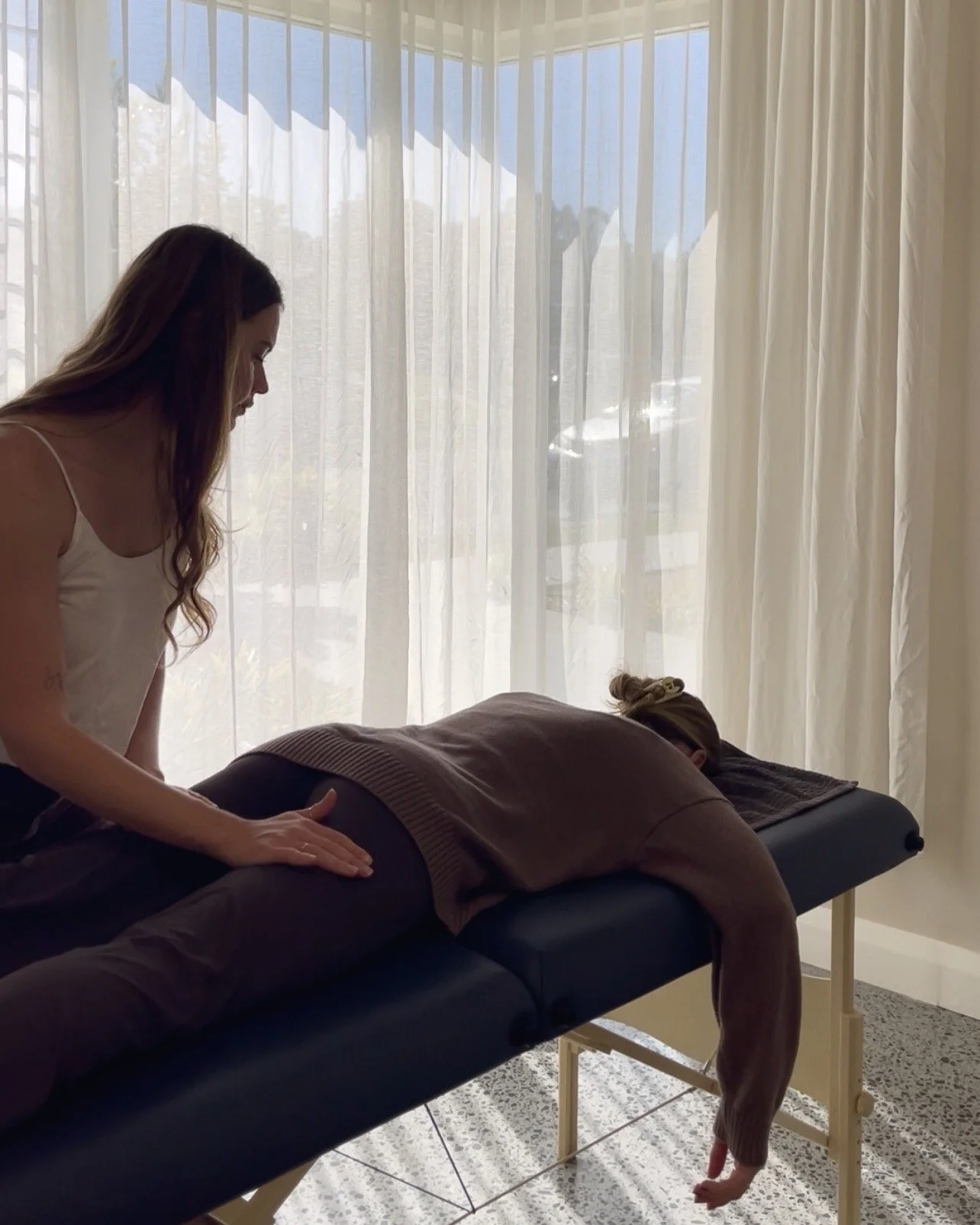
I make light contact at points along your spine, sacrum and cranium. You stay fully clothed. Nothing is pushed, cracked or forced. From there, your body does the work.
Your body stores three kinds of stress
Emotional — anxiety, overwhelm, grief, the weight you can't quite put down.
Physical — injuries, chronic pain, tension that never fully lets go.
Chemical — food intolerances, medications, a gut that's been off since everything got hard.
Once you start looking at your life through those three, things become visible that weren't before — what's adding to the load, and what you could ease off. That's a lot of the work.
Your body stores all three and lets them go for the same reason: safety. When your nervous system shifts out of fight-or-flight and into rest-and-repair, it can finally put down what it's been holding.
Most of us have been holding for years without realising. It just became normal.
You don't have to arrive knowing which kind of stress you're holding, or why, or where it came from. That's what the assessment is for. I'll tell you what I see and what I feel, and we build your care plan from there.
Stress builds in layers. The everyday kind sits near the surface — tension, broken sleep, that wired-but-tired feeling. Underneath it sit the deeper layers: stress your body has been holding for years, sometimes decades.
Your body can only release the deeper layers once the surface settles. And surface stress re-accumulates between sessions. Too much time between visits and each session gets spent clearing what the week put back — you stay at the surface.
This is why consistency matters more than intensity here. Regular sessions stop the re-accumulation cycle, and your nervous system begins to recognise the table as a place of safety. That baseline of safety is what lets your body go deeper. It's where the real changes happen: sleep, pain, energy, how you respond to your life.
Nothing is forced. Your body decides what it's ready to release, and when.
Why this takes time, and why that's the point
Allow an hour. It's longer than your regular sessions, because we're getting to know your body and building your plan together.
You'll have filled in a health history before you come, so I already understand some of what you're carrying. We go through it together, and I explain how spinal flow works.
Then a posture and spine check. Once I've felt along your spine, I'll share with you where your body is holding physical, chemical and emotional stress.
Then your first session on the table.
You'll leave knowing what I found and what I recommend from here.
What actually happens on your first visit
What it's like on the table
You lie face down, fully clothed, and the first thing that usually happens is your body starts to let go of the day. This is where you begin to connect in — nowhere to be, nothing to hold, no one needing anything from you.
Most of the session is quiet, and that's deliberate. The silence gives your nervous system room to settle without needing to explain, analyse or perform.
Let yourself go heavy, and stay with your body while you do — where my hands are, what's warm, what's tight, what shifts. Not working it out. Just noticing.
Your body may have been holding a certain way for a very long time. It had its reasons. You don't need to know what they were, and you don't need to understand what's releasing while it releases.
If your mind wanders, that's normal. When you notice, come gently back.
Whatever comes up is welcome. Some people feel warmth, or waves, or gentle movement. Some sigh. Some cry. Some feel emotion arrive from nowhere. Some feel very little at first, which doesn't mean nothing is happening — a lot of the work happens beneath what you can consciously feel.
This is deep rest, but it's awake rest. What your body does here doesn't stop when you get up — it keeps integrating over the days that follow. And the noticing you practise on the table is the thing you take with you. Over time you get better at reading your own body — off the table, in your life, before things build.
Group Flow
Once you've had your initial visit, your follow-up sessions run as Group Flow — one other person in the room, two tables, and me moving between them.
I make contact, your nervous system responds, and then I step away to the next table. That time isn't a gap in your session. It's where your body does its own work — integrating what's just happened, completing the response we started, without interruption and without anyone watching. Then my hands come back and we build from wherever your body has got to.
The contact points are the same. What changes is that you get uninterrupted time to integrate between them, and that's where a lot of the real change happens.
Each person is brought in and settled one at a time, and your session stays entirely your own. Anything you tell me, and anything your body does, stays between us. But a room where other people are also letting go holds a particular calm. Most people find it easier to drop into than doing it alone.
Everything else holds. Mostly quiet, your attention with your body and my hands. The rest is up to you and your nervous system.
What happens afterwards
Your session doesn't end when you get up off the table. The next day or two is where a lot of the change actually happens — your body keeps integrating long after you've left.
Most people feel light, clear, a bit spacey, sometimes very tired. Sleep is often the first thing to shift. Some people notice emotion arriving at odd moments over the next few days, with no particular story attached to it.
Some people feel worse before they feel better, and that's a normal part of this. Old aches can flare, you can feel wrung out, something you thought was long gone can surface for a day or two. It isn't a setback — it's stress your body has finally got enough safety to let go of, and it passes.
What helps: water, sleep, letting yourself move gently, eating properly, and leaving some room in the day where you can. What doesn't: a big night, a hard training session, or trying to work out what it all means.
That last one matters more than it sounds. You don't need to analyse it. Your body knows what it's doing, and the analysing pulls you straight back up into your head — out of the thing that was working.
If anything comes up between sessions and you're not sure about it, message me. That's part of your care, not an extra.
Spinal flow works with your nervous system, and your nervous system is involved in everything. So what brings people in is broad. I welcome all to my clinic - babies, kids, and adults.
You might be the one everybody leans on — other people's hard days get your full attention, and yours get postponed. You're good at being fine.
You might have done a lot of work already. Breathwork, yoga, journalling, therapy. It helped. Something underneath it hasn't moved.
You might be tired in a way that sleep doesn't touch, and want somewhere to put that down.
Some people come in carrying grief. Some come in because things are objectively fine and something still isn't landing.
And some people aren't coming in for a problem at all. You don't need something wrong with you to be here. Choosing to put your body into rest and repair, over and over, is one of the most useful things you can do for it — and the reconnection that comes with it is the part people don't expect. You start to know your own body again. What it's telling you, what it needs, when something's off before it becomes something.
Then there's what your body's been holding physically — pain that hasn't shifted, broken sleep, fatigue, headaches and migraines, jaw tension, sciatica, digestion that's been off since everything got hard, periods that take you out, old injuries you still move around.
If you've got something specific going on — a condition, a recent surgery, a pregnancy — message me before you book. There's almost always a way in; I'd just rather talk it through with you first.
Who this is for
Starting
If you've read this far, some part of you already knows this is for you.
An hour, an assessment, your first session, and a plan. It's how everyone begins.